












-500x500-90x90.png "Bravair Clima")
-90x90.png "CHERBROS")
-90x90.png "OMNIPLAST")


-90x90.png "WURTH")

-90x90.png "BENUS")


-90x90.png "Daesung")


-90x90.png "BRAVAIR")

















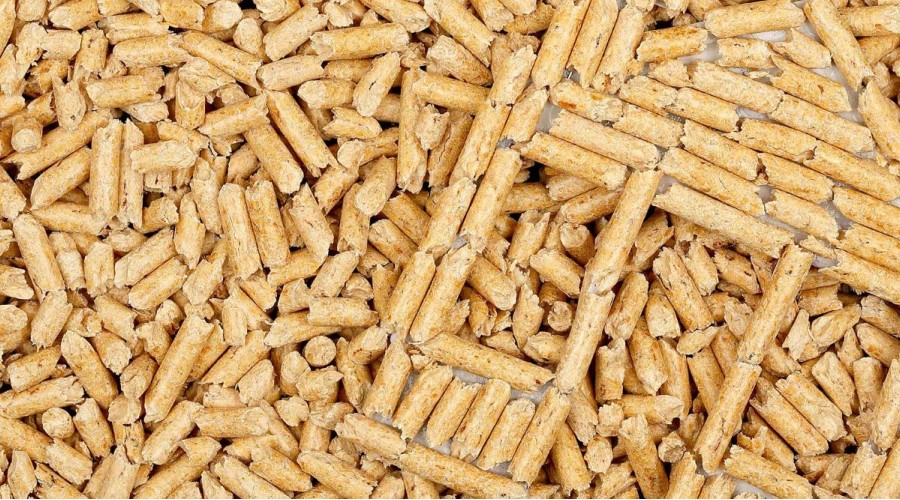
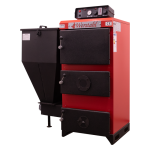
Pellet (aggregates) is a fuel consisting of wood, free from all moisture, pressed into small cylinders without no added adhesives. The calorific efficiency of the pellets it amounts to 4500 kcal/kg
Pellets are a new fuel that answers the demand for clean and cheap energy. The heating solution with pellets gives the possibility to we have an economy in the heating of the house of the order of 50% - 70%
Pellets belong to the category of renewable energy sources and can be produced from wood processing residues and agricultural crops as well as from the cultivation of energy plants. It is in compressed form, 6mm-8mm in diameter and 10mm-50mm in length.
Pellets are also ecological fuels because:
 The
burning them has a zero balance of carbon dioxide (CO2) not
contributes to the greenhouse effect - because its quantities
of carbon dioxide (CO2) released during its combustion
biomass are again bound by the plants to create the biomass.
The
burning them has a zero balance of carbon dioxide (CO2) not
contributes to the greenhouse effect - because its quantities
of carbon dioxide (CO2) released during its combustion
biomass are again bound by the plants to create the biomass.
The negligible existence of sulfur contributes significantly to the limitation of emissions of sulfur dioxide (SO2) which is responsible for acid rain.
Other advantages are:
Since biomass is a domestic source of energy, its utilization in energy contributes significantly to reducing dependence on imports fuel and improvement of the trade balance, in securing it energy supply and saving the currency.
The energy utilization of biomass in an area increases employment in rural areas by  use
alternative crops (various types of canola, sorghum, cane,)
the creation of alternative markets for traditional crops
(sunflower etc.), and keeping the population in their homes,
thus contributing to the socio-economic development of the region.
use
alternative crops (various types of canola, sorghum, cane,)
the creation of alternative markets for traditional crops
(sunflower etc.), and keeping the population in their homes,
thus contributing to the socio-economic development of the region.
Pellets are made from compressed sawdust and wood shavings (the wood waste) and are used in the form of small cylinders as biofuel for domestic and industrial use, such as in Fireplaces, Stoves, Factory Burners, Bakery Ovens, Hotels, Pizzerias, Large Industrial & Public Spaces etc. The pellets will become a biofuel of the economic crisis period, especially after simulating the price of heating oil and that of traffic because pellets are a much cheaper fuel than oil.
As an example, burning 2 tons of pellets has the same thermal efficiency with 1,000 liters of oil. Pellets in Greece will be prominent to the fuel of the future!!
WHY SHOULD I USE PELLETS?
Pellet is more economical to use than oil. It has stable quality and humidity (8 - 10%).
It is clean and easy to use and store as it is packed in 15 kg sacks.
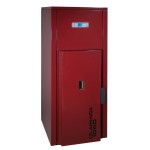
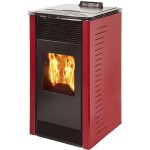
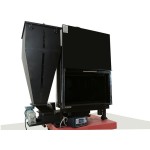
Pellet stoves are the most ideal solution for apartments and business premises that have the possibility to export small chimney.
The combustion it shows is greater than 93%
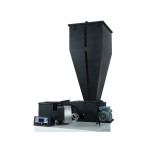
Continuous feeding is not required because they have a tank for it Fuel. It needs filling once or twice a week (depending the use and operating intensity).
The warmth and sensation of fire is the same as that of wood.
They can cover ecologically and completely the heating needs of an average house without the use of another heating source.
What do they mean for our economy?
 At the national level, the production of fuel from domestic raw materials means a corresponding reduction in fuel imports.
In
private level, the use of pellets instead of conventional ones
of fuel (oil, natural gas, electricity) means economy that can
to reach 70% of the total heating costs. Even in
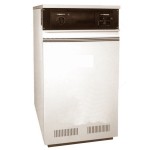
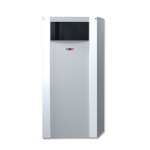
case requiring replacement of the used boiler and
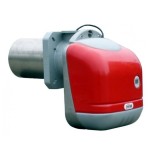
burner, the savings are such that the amortization of the investment
performed in less than three periods of use.
27 Comment(s)
Really inspiring to see community-led tech initiatives like this taking shape. Collaboration and creativity can lead to amazing results — reminds me of fan-created projects like Pokémon Infinite Fusion where people build and share unique experiences together. Keep up the awesome work!
Great article! I really appreciate the insights. By the way, I recently explored Global Canopies — they offer top-notch canopy solution
This is a very insightful post! I really appreciate the clarity and the valuable points you’ve shared. Posts like this make learning so much easier. Keep up the great work.
Great post! The way you explained the topic was clear, practical, and easy to understand. Really appreciate the effort you put into sharing this knowledge. Looking forward to more of your content.
This is such a valuable post! The insights shared here are not only informative but also very practical. Thank you for putting this together—it’s definitely something many people will benefit from.
It's very easy to find out any matter on web as compared to textbooks, as I found this post at this website.
Hello it's me, I am also visiting this website regularly, this website is genuinely good and the users are in fact sharing fastidious thoughts.
I am sure this article has touched all the internet viewers, its really really nice piece of writing on building up new website.
Great write-up, I am normal visitor of one's site, maintain up the excellent operate, and It's going to be a regular visitor for a long time.
There is certainly a lot to find out about this topic. I love all of the points you have made.
Nice weblog right here! Also your website loads up very fast! What web host are you the use of? Can I get your affiliate hyperlink in your host? I desire my web site loaded up as fast as yours lol.
Hi, I read your new stuff daily. Your story-telling style is witty, keep up the good work!
Greetings! I've been reading your weblog for a long time now and finally got the courage to go ahead and give you a shout out from New Caney Texas! Just wanted to say keep up the fantastic job!
Wow, this post is nice, my younger sister is analyzing these things, therefore I am going to let know her.
I went over this web site and I think you have a lot of great information, saved to my bookmarks (:.
Excellent write-up! You’ve explained everything so clearly. Thanks for taking the time to share this.
Everyone loves it when people come together and share thoughts. Great website, keep it up!
Hello! I've been following your blog for a long time now and finally got the bravery to go ahead and give you a shout out from New Caney Tx! Just wanted to tell you keep up the good work!
The recreation has been within the works for some time: NaturalMotion was acquired by Zynga two years in the past, but CSR Racing 2 will likely be its first release since then.
Way cool! Some very valid points! I appreciate you writing this write-up and the rest of the website is extremely good.
Leave a comment