










-500x500-90x90.png "Bravair Clima")
-90x90.png "CHERBROS")
-90x90.png "OMNIPLAST")


-90x90.png "WURTH")

-90x90.png "BENUS")


-90x90.png "Daesung")


-90x90.png "BRAVAIR")















Because fireplaces and wood stoves are expected to sigh
and this year also because the smog is not there anyway
save, it would be good to learn the basics, if only to achieve the best possible performance and less noise.
The problem with firewood mainly concerns those who do not have it
energy fireplace or stove that can burn pellets and is
users of conventional fireplaces.
The main advice given by the experts has to do with it
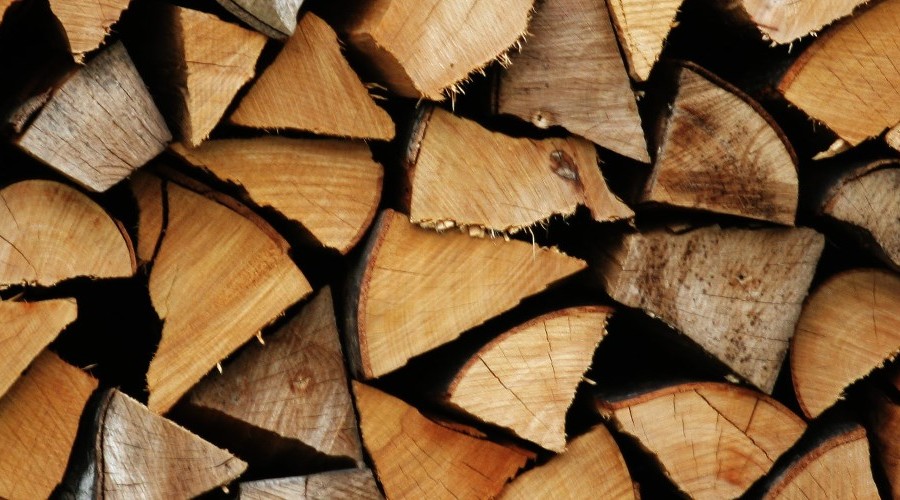
choice of wood but also with the way of storage, factors that
are directly related to calorific value and energy efficiency,
given that in a conventional fireplace the firewood cannot
offer more than 50% of their performance.
Those who know about firewood point out that the first choice will
it should be beech and oak and not conifers. And
because now the market is not made by the ton, but by the cubic, c
to be able to calculate what you are buying, the people of the square
point out that roughly one ton of wood corresponds to 1.6 cubic meters
measures.
This year's prices range around 90 euros for beech, oak
and the pine, around 110 for the eucalyptus and the holly and
somewhere around 120 for the olive, per cubic meter. As for humidity
and the correct way of storage, useful are the instructions for…
by the General Secretariat of Trade and Commerce.
Water on wood
Wood is not usually found in a dry state, but contains
humidity that can range from 15% to 60% depending
with the conditions and time of its natural drying, a fact that
reduces its calorific value. As a porous and hygroscopic material,
the result is that its humidity can fluctuate
depending on the prevailing atmospheric conditions (temperature,
air humidity etc).
The reduction in calorific value due to humidity is due to
that part of the energy released during it
of combustion is spent on the evaporation of water and is therefore not
available for any desired thermal exploitation. Has been
generally accepted that moisture for its energy utilization
of wood, in domestic applications, should not be greater than
20%.
Drying
Firewood begins to lose moisture from winter, but the
March sees the greatest loss of water (about 10%). The
hot summers the wood that is chopped - split in December
and stored in a covered area can reach, already from
June, at humidity levels of 20% and therefore be suitable for
to be marketed as "finished dry wood".
However, in the case of wet summers the observed
differences are minimal and the 20% humidity level will be reached
about a month later. In general, the different types of firewood
they take more or less the same amount of time to reach it
desired humidity level of 20%. From September, the
harvested wood regains moisture from wind and rain.
Logs stored covered dry relatively more
quickly during the first months of winter. This advantage
of covered wood is compensated for uncovered wood at
during the summer months.
Save
The natural drying of firewood can be done either in the open
spaces either covered and ventilated, but in each
case they must be protected from soil moisture and
the rain.
Basic principles for storing firewood:
* The floor
must be kept dry. If possible, air movement should be facilitated by elevating the firewood stack off the ground with wooden supports.
* It is
preferably stored in places that are open to air and sun.
*You must
there is a distance of at least 10 cm between the stacks and between the stack and the wall of the storage structure.
* The
firewood for daily use should be stored near the combustion area so that it has been preheated before use.
29 Comment(s)
Really enjoyed this post! Clear, informative, and thoughtfully written. Thanks for sharing such valuable insights.
Really enjoyed this post! Clear, informative, and thoughtfully written. Thanks for sharing such valuable insights.
Your guidance and encouragement have been invaluable in helping me discover the benefits of blogging.
This was an insightful read! I truly appreciate the clarity and depth you brought to the topic. Looking forward to more posts like this.
i appreciate your content
At this time it looks like BlogEngine is the top blogging platform out there right now. (from what I've read) Is that what you are using on your blog?
Je suis le chroniqueur officieux du Golden Panda Casino. Je rapporte ses changements et leurs effets pour les utilisateurs.
https://rapid.tube/@danilegrand898?page=about
https://cloveebiz.com.ng/@vernitahaydon4?page=about
http://8.134.32.42:3000/wildaxlx080929
https://xsocial.top/read-blog/84_golden-panda-casino-a-glimpse-into-a-world-of-high-stakes-and-eastern-promise.html
https://rels.com.au/author/samzuj0920023/
http://fort23.cn:3000/bonitatruitt2
https://axdl.ru/employer/golden-panda-casino-fr
https://property.cbaservices.id/author/lenoresebastia/
http://60.204.149.27:13000/earnestmagee5
http://8.136.119.125:10880/andrewshank57
Je crois que chaque joueur peut perfectionner son jeu au Golden Panda Casino. Mon blog est l'outil ultime pour y réussir.
https://git.imvictor.tech:2/shona41c831800
https://git.owlhosting.cloud/nannettearkwoo
http://47.95.167.249:3000/elsahobbs5241
http://81.69.57.215:3000/grazynabattles/golden-panda-casino-fr.com4318/wiki/Golden-Panda-Casino%3A-A-Glimpse-into-the-Opulence-and-Controversy-of-the-Macau-Gaming-Giant
http://118.31.50.10:3000/georgeavf19933
http://47.115.203.168:3000/jameyrhoades0/6216364/wiki/Golden-Panda-Casino%3A-A-Deep-Dive-into-Fortune%2C-Fortune%2C-and-Fantasy
https://jobcop.in/employer/golden-panda-casino-fr/
http://git.neihedaren.com:8443/cecilhynes6979/8585golden-panda-casino/issues/1
https://recrutement.fanavenue.com/companies/golden-panda-casino-fr/
https://friendza.enroles.com/read-blog/90255_golden-panda-casino-a-deep-dive-into-a-fictional-gaming-empire.html
Wow! This blog looks just like my old one! It's on a completely different topic but it has pretty much the same layout and design. Outstanding choice of colors!
I’ll right away clutch your rss feed as I can’t to find your email subscription link or e-newsletter service. Do you’ve any? Please permit me recognize in order that I may subscribe. Thanks.
Ik analyseer de wiskunde achter elk casinospel. Gewapend met deze kennis gok je niet langer, je optimaliseert.
I visited several sites however the audio quality for audio songs current at this web site is actually fabulous.
Ahaa, its fastidious dialogue regarding this post at this place at this weblog, I have read all that, so now me also commenting at this place.
Amazing! This blog looks just like my old one! It's on a completely different topic but it has pretty much the same layout and design. Excellent choice of colors!
It's very simple to find out any matter on net as compared to books, as I found this piece of writing at this website.
I just could not go away your site prior to suggesting that I extremely loved the standard information a person provide in your guests? Is gonna be again steadily to investigate cross-check new posts
It's very trouble-free to find out any topic on net as compared to books, as I found this piece of writing at this web page.
I am sure this piece of writing has touched all the internet viewers, its really really good post on building up new web site.
I really like how you explained everything in detail. This post was both educational and enjoyable to read.
Really enjoyed reading this! The content was informative and engaging. Keep up the good work.
Leave a comment